How Much Is Your Business Losing to Missed Follow-Ups Every Month?
How Much Is Your Business Losing to Missed Follow-Ups Every Month?
The math most small business owners never run, and why it matters more than your ad spend.
You spent $800 on ads last month. Maybe $1,200. You tracked the clicks, watched the impressions, checked the cost per lead. But you probably did not track how many of those leads never heard back from you. That number is almost certainly larger than you think, and it is almost certainly costing you more than the ads themselves.
The short answer:Most small businesses with fewer than 10 employees lose between $2,000 and $15,000 per month in revenue from leads that went cold because nobody responded fast enough or followed up consistently. The problem is rarely a lack of leads. It is a lack of a system to catch them.
How Much Does a Single Missed Follow-Up Actually Cost?
The cost depends on what you sell. But the math is simpler than most business owners expect: take your average transaction value, multiply it by your close rate, and that is what each lead is worth before you touch it.
For a real estate agent with an average commission of $8,000 and a close rate of 3% from online leads, each inbound lead is worth roughly $240 in expected value. Lose 20 leads a month to slow response times, and that is $4,800 you never see.
For a service business with an average job worth $500 and a close rate of 25%, each lead is worth $125. Lose 15 a month, and that is $1,875.
Those numbers do not include the long-tail cost: the referrals that lead would have sent you, the repeat business over three to five years, the review they would have left on Google. The real cost of a missed follow-up is always higher than the single transaction.
Business TypeAvg. TransactionClose RateLead ValueEst. Monthly Lost LeadsMonthly CostReal estate agent$8,0003%$24020$4,800Home services contractor$2,50020%$50015$7,500Small service business$50025%$12515$1,875Specialty retailer$15040%$6030$1,800
These are conservative estimates. For businesses running paid ads, the math gets worse because you already paid for the lead and then failed to convert it.
Where Do Most Small Businesses Lose Follow-Ups?
Most follow-ups do not get lost because business owners are lazy. They get lost because the business has no system to catch them, and the owner is doing six other jobs at the same time.
The most common failure points, in order:
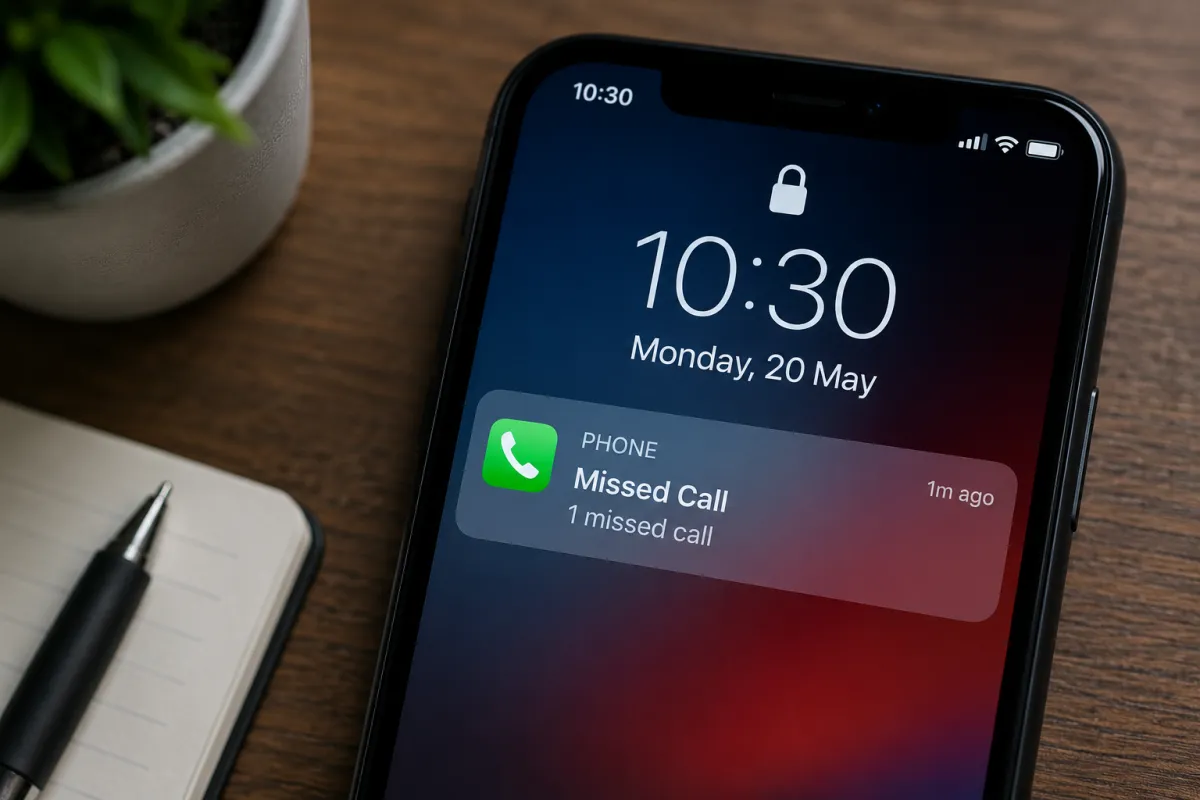
Missed phone calls.Research from Lead Response Management shows the odds of qualifying a lead drop by 10x after the first five minutes. Most solo operators cannot answer the phone within five minutes when they are on a job site, in a showing, or eating lunch.
Form submissions that sit in an inbox.A web form comes in at 2 p.m. You see it at 7 p.m. By then, the prospect has already called two competitors. NAR research indicates that 78% of buyers work with the first agent who responds meaningfully (National Association of Realtors, 2023 Home Buyers and Sellers Profile).
No second touch.Even when the initial response happens, most small businesses have no defined follow-up sequence. The first email goes out. Then nothing. Research consistently shows that 80% of sales require five or more follow-up contacts, but 44% of salespeople give up after one attempt (Marketing Donut / Brevet Group data).
Social media and text inquiries.DMs, Facebook messages, Google Business Profile messages. These come in on platforms the business owner checks inconsistently. By the time they see the message, the prospect has moved on.
The pattern is the same regardless of industry: the lead arrives, nobody catches it fast enough, and it goes cold. Not because the business is bad at what it does, but because nothing stands between the lead and silence.
What Does This Look Like for a Real Estate Agent?
Here is a common scenario. Consider a solo real estate agent running $1,000/month in Facebook and Google ads. Those ads generate roughly 40 leads per month.
Of those 40, the agent responds to about 25 within the first 24 hours. The other 15 come in during showings, during dinner, on weekends when the agent is with family.
Of the 25 the agent does reach, maybe 8 get a meaningful second follow-up. The rest get one text and then fall off the radar.
At a 3% close rate on online leads and an average commission of $8,000, each of those 40 leads carries an expected value of $240. The 15 that went unanswered represent $3,600 in expected lost revenue. The 17 that got one touch but no follow-up sequence represent another $4,080 in partially lost opportunity.
Total: roughly $7,680 per month in revenue that agent already paid to generate and then failed to capture.
When Bennin Systems built the client acquisition system for Nancy Clark's real estate operation in Southwest Montana, this gap was the first thing we addressed. The system sends an automated text within 60 seconds of a new inquiry, asks a qualifying question, and routes the lead into a pipeline with defined follow-up stages. The agent still does the relationship work. The system makes sure nobody falls through the floor while she is doing it.
What Does This Look Like for a Service Business?
Service businesses face the same math with different numbers. When Bennin Systems deployed Emma, the AI chatbot for Scotty's Oil in Montana, the business had a specific version of this problem: customers calling to place fuel orders during hours when nobody was at the desk.
Every missed call was a potential $300 to $500 fuel order. Not a lead that might convert someday. An actual customer, ready to buy, who could not reach anyone. Multiply that by 10 to 15 missed opportunities a week, and the revenue walking out the door was substantial.
Emma catches those inquiries around the clock and routes them into the order pipeline. The business did not need more marketing. It needed a system between the customer and silence.
This is the pattern across industries: the business is spending money to generate demand (or in Scotty's case, demand already exists) and then losing a portion of that demand to response gaps that nobody is tracking.
How Do You Calculate Your Own Cost of Missed Follow-Ups?
The calculation is straightforward, and every business owner should run it at least once. Estimate your monthly inbound inquiries across all channels, then estimate how many get a response within one hour. Be honest. The gap between those two numbers is your missed follow-up count.
Multiply your missed follow-up count by your average lead value (average transaction multiplied by your close rate). That is what you are losing. Every month.
Your NumbersValueMonthly inbound inquiries (all channels)___Responded to within 1 hour___Missed follow-ups (gap)___Average transaction value$___Close rate (%)___%Lead value (transaction x close rate)$___Monthly cost of missed follow-ups$___
Most business owners who run this math for the first time are uncomfortable with the result. The number tends to be larger than what they spend on marketing, which means they are investing in generating leads and then quietly letting half of them expire.
When Is Automation NOT the Answer?
Not every follow-up problem requires a system. This is worth saying plainly because the automation industry has a financial incentive to tell you otherwise.
If you get fewer than 20 inbound leads per month, a spreadsheet and a daily 15-minute block to respond might be all you need. The economics of deploying a CRM and automation pipeline do not pencil out below a certain volume.
If your average transaction is under $100, the cost of most automation tools ($97 to $297/month) may exceed what you recover. Do the calculation first.
If the problem is not speed but quality (your follow-ups happen on time, they just do not convert), automation will not fix that. You have a sales problem, not a systems problem. Those require different solutions.
The businesses where automation earns its keep are the ones where the volume is high enough that a human cannot physically respond to every inquiry within five minutes, and the transaction value is high enough that each lost lead costs real money. Real estate, home services, professional services, specialty retail with consultative sales. If you are selling $15 T-shirts online, this article is not for you.
What Should You Do About This?
If you ran the calculation above and the number made you uncomfortable, three things are worth thinking about.
First, know your actual number. Most business owners have never calculated their cost of missed follow-ups. The number itself changes behavior, even before you build anything.
Second, understand that the solution is a system, not more effort. Telling yourself to "be better about following up" does not work when you are already doing six jobs. The follow-ups that happen consistently are the ones that happen automatically.
Third, recognize that this is a solved problem. Automated follow-up systems exist, work reliably, and cost between $97 and $500/month depending on complexity. The technology is not the hard part. The hard part is building a system that matches your business, your voice, and your workflow instead of forcing you into someone else's template.
That is the work Bennin Systems does. We build follow-up and client acquisition systems for small businesses and real estate professionals. Not a generic template you try to configure yourself. A system designed for how you actually work, deployed and maintained so you can focus on the work that requires a human in the room.
If you want to know what that looks like for your business specifically, start at benninsystems.com.
Frequently Asked Questions
How many follow-ups does it take to convert a lead?
Research consistently shows that 80% of sales require five or more follow-up contacts after the initial inquiry. Most small businesses stop after one or two attempts. The gap between what the data supports and what most businesses actually do is where revenue disappears. A defined sequence of five to seven touches over 14 to 21 days outperforms sporadic follow-up by a wide margin.
What is the average response time for a small business?
Studies indicate the average small business takes over 24 hours to respond to a new web lead (Drift/InsideSales research). The optimal window is under five minutes. After 30 minutes, the odds of qualifying a lead drop significantly. For phone calls specifically, most solo operators miss 30 to 50% of inbound calls during business hours because they are with customers, on job sites, or simply away from their desk.
How much does a CRM cost for a small business?
Basic CRM tools (HubSpot free tier, Zoho free) cost $0 to $30/month. Mid-range platforms with automation capability (GoHighLevel, ActiveCampaign) run $97 to $297/month. Enterprise tools (Salesforce, HubSpot paid tiers) start at $500/month and scale quickly. For most small businesses with fewer than 10 employees, the $97 to $200/month range covers what is needed.
Can I just use reminders on my phone instead of a system?
For businesses with fewer than 10 leads per month, phone reminders might be sufficient. The problem with reminders is that they depend on you being available, attentive, and consistent every single day. Systems work when you are sick, on vacation, in a meeting, or having a bad day. Reminders only work when you do.
What is missed call text-back?
Missed call text-back is an automation that sends a text message to a caller within seconds of a missed call, typically saying something like "Sorry I missed your call. How can I help?" It keeps the conversation alive while you are unavailable. For real estate agents and service businesses, this single automation can recover 20 to 40% of otherwise lost inquiries (based on Bennin Systems deployment data).
How do I know if I have a follow-up problem?
Check three things: how many inbound inquiries you received last month across all channels, how many of those got a response within one hour, and how many got a second follow-up within 48 hours. If you cannot answer those questions with specific numbers, you have a follow-up problem. The inability to track it is itself the problem.
What is the difference between automation and outsourcing follow-ups?
Automation uses software to send responses, route leads, and trigger follow-up sequences. Outsourcing hires a person or service to do it. Automation is cheaper ($97 to $300/month vs. $1,000 to $3,000/month for a VA or answering service) and more consistent, but less flexible for nuanced conversations. For initial response and lead routing, automation wins. For complex sales conversations, you still need a human.
How quickly should a business respond to a new lead?
Under five minutes is the benchmark supported by research. Lead Response Management data shows qualification rates drop 10x between the 5-minute mark and the 30-minute mark. For real estate specifically, NAR data indicates that 78% of buyers work with the first agent who responds meaningfully. "Meaningfully" matters: an automated qualifying question ("What area are you looking in?") converts better than a generic "thanks for your inquiry."
About the Author
Stacy Bennin is the founder of Bennin Systems, an operational systems and AI automation consultancy based in Paradise Valley, Montana. She builds custom websites, automated client acquisition systems, brand identity, and operations workflows for small businesses, real estate professionals, and family operations. She is also a licensed Montana real estate broker affiliated with Legacy Lands Real Estate. Reach her at benninsystems.com.
