Can You Set Up AI Inside My Business That I Actually Own?
Can You Set Up AI Inside My Business That I Actually Own?
A subscription gives you access. A system gives you an asset. Which one you end up with is decided before any tool gets turned on.
Focus keyphrase:AI your business actually owns
The short answer:Yes. AI can run inside accounts your business controls, work from data that stays yours, follow instructions you can read and change, and keep running if the person who built it walks away. That is not how most AI gets sold to small businesses, which is exactly why it is worth asking for.
You have probably felt the catch in most AI offers without being able to name it. The tool is impressive, the demo is smooth, and somewhere underneath it is a quiet condition: everything interesting lives in someone else's account. This post names what ownership actually means, which parts of an AI setup you can own, and what the honest tradeoff is.
The stakes are not abstract. In BrightLocal's 2026 Local Consumer Review Survey, 45 percent of the 1,002 US consumers surveyed said they had used ChatGPT or other generative AI tools for local business recommendations, up from 6 percent the year before (BrightLocal, 2026). AI is already standing between you and your customers. The question is whether the AI working on your side of that exchange belongs to you.
What does it mean to actually own your AI?
Owning your AI means four things at once: the system runs in accounts your business controls, it works from data that stays yours, its instructions are written down where you can read and change them, and another competent builder could take it over tomorrow without starting from scratch. Miss any one of those and you are renting, whatever the invoice says.
The test is the same one that applies to where your business data lives, just moved up a layer. A chatbot that answers your customers from inside a vendor's proprietary platform, trained on instructions you have never seen, storing conversations you cannot export, is not your chatbot. It is the vendor's chatbot wearing your logo.
The question to ask anyone selling you AI is simple: if we part ways next year, what do I still have? If the honest answer is a login that stops working, you were never buying a system. You were buying a subscription with extra steps. Vendors vary on this, which is the point of asking: some hand over exports, instructions, and admin access gladly, and their willingness to answer is itself information.
None of this makes renting evil. Renting is how everyone should experiment. It becomes a problem only when a business builds its daily operation on top of an arrangement it does not control and never checked.
Which parts of an AI setup can you own, and which can't you?
Almost nobody owns the model. Not you, not Bennin Systems, not the agency charging five times more. The engines that read and write language (Claude, ChatGPT, Gemini) are rented by nearly everyone who uses them. (Self-hosted open models exist, but running one is a project no small business should take on to answer its phones.) What you can own is everything wrapped around the engine, and that wrapper is where most of the value lives.
An AI setup has five parts, and they are worth naming separately, because sellers love to blur them together:
1. The model.The engine itself. Rented, in practice, by everyone. This is the interchangeable part, which is the opposite of how it gets marketed.
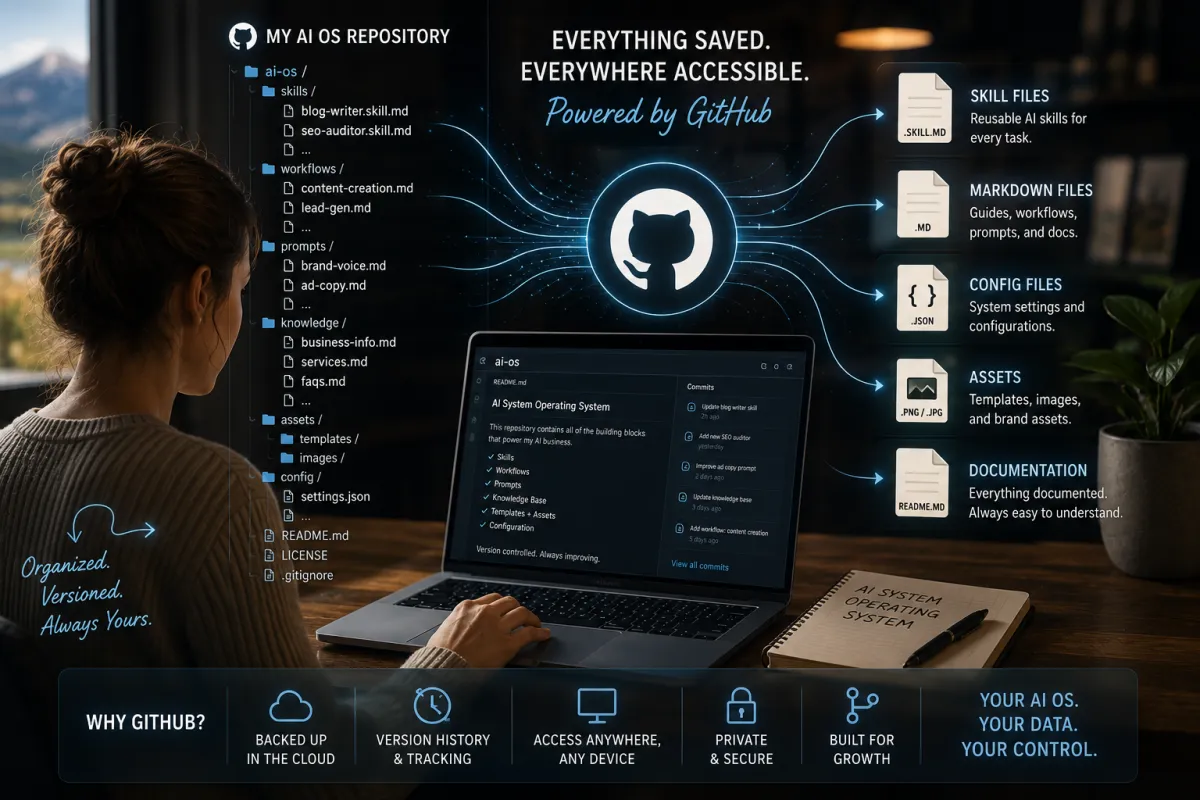
2. The instructions.What the AI knows about your business: your services, your prices, your boundaries, what it should never promise. This is ownable in full, and it is where your business actually lives inside the system.
3. The data.The conversations, orders, and records the system reads and writes. Ownable, and it should sit where you control it, for the same reasons your contact list should.
4. The accounts.Where the system runs and who holds the admin login. Ownable. Whoever holds admin holds the off switch.
5. The workflow.What happens before and after the AI: how a caller reaches it, where the order goes, who gets notified, what record gets kept. Ownable, and usually worth more than the AI itself.
Read the table from the bottom up and the sales pitches get easier to decode. A vendor who talks only about the model is selling you the one part nobody owns.
Why do the defaults matter more than the tool?
Because the defaults are set for the vendor's convenience, not yours, and ownership is mostly the act of choosing your arrangements on purpose. The same AI engine can sit inside an arrangement that protects your business or one that quietly works against it, and the difference is rarely the technology. It is the terms, the accounts, and where the data lands.
Look at what the vendors themselves publish. OpenAI's own privacy settings pageexplains that in the consumer product, "chat data can help us improve model quality," with a setting you can switch off: "You can turn this setting off at any time." That is a fair arrangement for a free tool, and the paid business tiers work under different defaults. It is a different arrangement than a business should accept for customer conversations, and the page itself is honest about the distinction.
Commercial arrangements read differently on purpose. Anthropic'sCommercial Terms of Service, effective June 17, 2025, state plainly that Anthropic "may not train models on Customer Content." The protection exists. It just is not the default a business stumbles into by typing customer details into a free chat window.
The pattern extends past AI. Microsoft'sServices Agreement, effective September 30, 2025, says "Your Content remains yours and you are responsible for it," then adds, a few sections later, "You should have a regular backup plan as Microsoft won't be able to retrieve Your Content or Data once your account is closed." Yours in claim, theirs in practice, unless you arrange otherwise. Every platform your business touches works some version of this seam.
None of that is a scandal. It is just how default arrangements work, and a business that never reads them inherits whatever they say. An owned AI setup is the opposite move: someone read the terms, chose the accounts, decided where the data lands, and wrote it all down before the first customer ever talked to the system.
What does an owned AI setup look like in a real business?
It looks ordinary, which is the best thing about it. The AI answers, the order lands, the record exists, and the business holds every account involved. No dashboard mystique, no monthly hostage payment, no single person whose departure takes the system with them.
Emma is the working example. She is the AI assistant Bennin Systems built for Scotty's Oil, a family fuel company in Central Florida that has been delivering for nearly six decades. When a customer calls after hours, Emma answers, takes the order, structures it, and sends it to the team, so a 9 pm phone call becomes a clean record instead of a voicemail somebody has to decode in the morning. The accounts she runs in belong to the family. The order history she creates belongs to the family. What she is allowed to say and do is written down where the family can read it.
Nancy Clark's real estate operation in Southwest Montana runs the same way one industry over: pipelines, conversations, and follow-up living in a system her business controls, doing thework an AI assistant is genuinely good at right nowwithout her renting her own client relationships back from a platform.
Notice what neither example includes: a claim that AI runs the business. People run both businesses. The systems catch what used to fall through, at hours no employee wants, and hand the results to the humans who own them. That is the whole promise, and it is enough.
What happens when a vendor changes the rules on you?
If you rent your AI, you absorb whatever changes: new pricing, new limits, new terms, or a sunset notice. No US law guarantees you a graceful exit. Europe now requires cloud providers to make switching feasible, but the United States has no broad equivalent, so on this side of the Atlantic, ownership is something you build in, not a right you can invoke later.
The European rule is real and recent. TheEU Data Acthas applied since September 12, 2025, requiring providers of data processing services to remove obstacles to switching, with switching charges eliminated entirely from January 12, 2027. A Montana business gets none of that protection. Its right to leave a platform gracefully is whatever the contract says, plus whatever it kept copies of.
Which is why the ownership question has to be asked at build time. A system assembled inside accounts you control can survive a vendor pivot the way a well-built house survives a change of lumber suppliers. Swap the engine, keep the structure. A system assembled inside someone else's platform survives nothing, because there is no structure to keep. The same logic behindchoosing tools that fit how you actually work applies one level up: the arrangement is part of the tool.
What is the honest tradeoff of owning your AI setup?
Owning costs more up front and asks more of you afterward. An owned setup needs oversight, occasional maintenance, and a person who cares whether it is still telling customers the truth. Renting a polished tool is genuinely the right call for experiments, for tiny operations, and for anything you might abandon in ninety days.
Here is the honest version. If you are one person testing whether AI can draft your emails, a twenty-dollar subscription is the correct purchase, and building anything custom would be a hobby. The math changes when the AI starts touching customers: answering calls, taking orders, capturing inquiries, carrying your name. At that point the setup is infrastructure, and infrastructure you cannot see into, export from, or hand to another builder is a liability compounding quietly under the nice demo.
The other side deserves saying too. An owned system that nobody maintains is not freedom, it is a slower version of the same failure, the waysoftware a business has outgrown keeps costing itlong after everyone stopped noticing. Ownership without upkeep is just a different landlord: the past version of you.
One more thing ownership is not. It is not a way to delete your staff. The point of a system that catches the 9 pm order is that your people spend tomorrow on the work that needs a human, so a team of three can serve like a team of ten. AI that multiplies people is worth owning. AI that exists to replace them is usually a sign the seller never understood the business.
The bottom line
The engine is rented, for you and for everyone else. What you can own is everything that makes the engine useful: the instructions, the data, the accounts, and the workflow. Most AI offers hand you the one part that was never ownable and keep the four parts that were.
So the question in this post's title has a real answer. Yes, AI can be set up inside your business as an asset you control rather than a black box you rent, and almost nobody selling AI to small businesses is offering that. Asking for it is how you find out who you are dealing with.
Next steps
Take the AI tool closest to your customers and ask the four ownership questions about it: whose account does it run in, where does its data land, can you read its instructions, and what would you still have if the relationship ended next month. Write the answers down. Ten minutes, and you will know whether you hold an asset or a subscription.
If the answers come back wrong, or if you are still figuring out what AI your business actually needs, Bennin Systems builds AI setups that belong to the businesses running them: your accounts, your data, your instructions, working while you work. The first conversation is about your process, not a product.
Frequently Asked Questions
Can a small business really own its AI setup?
Yes, with one honest caveat. The AI model itself is rented by nearly everyone who uses it. Everything around the model is ownable: the accounts it runs in, the data it creates, the instructions that shape it, and the workflow it feeds. A setup built that way is a business asset, not a subscription.
Do I own the AI model itself?
Practically speaking, no, and neither does anyone selling to you. The engines (Claude, ChatGPT, Gemini) are rented by nearly every business that uses them. Treat the model as interchangeable infrastructure. The parts worth owning are the instructions, data, accounts, and workflow built around it, because those carry your business.
Is a monthly AI subscription the same as having an AI system?
No. A subscription gives one person access to a tool. A system connects AI to your actual operation: it answers real customers, writes real records, and follows instructions specific to your business. Subscriptions are the right way to experiment. Systems are what you build once AI starts touching customers.
What happens to an owned setup if the person who built it leaves?
It keeps running, because it lives in your accounts, not theirs. The instructions are readable, the data is yours, and another competent builder can take over without starting from scratch. That continuity is the clearest single difference between an owned setup and a rented one.
Will my customers' conversations be used to train AI models?
Not under a proper commercial arrangement. Anthropic's Commercial Terms of Service, for example, state that Anthropic may not train models on customer content. Consumer tools work differently: OpenAI's settings page notes chat data can help improve model quality unless the setting is turned off. The arrangement, not the tool, decides.
How much does an owned AI setup cost compared to renting?
More up front, less over time, though the honest answer depends on scope. A rented tool bills forever and ends with nothing. An owned build is a project cost plus modest running costs, and it ends with an asset. The comparison worth making is against the revenue a missed call or dropped inquiry already costs you.
Can AI I own still break or stop working?
Yes. Owned does not mean maintenance-free. Models get updated, integrations shift, and instructions need adjusting as your business changes. The difference is that an owned system can be inspected and fixed by any competent builder, while a rented black box can only be waited on.
How do I know if my business is ready for an owned AI setup?
Ready usually looks like this: customers already reach you through calls, forms, or messages that sometimes fall through, and somebody on the team is drowning in repeatable work. If AI would touch your customers or your records, build it owned. If you are still experimenting privately, rent first.
Bennin Systems, Paradise Valley, Montana. (406) 224-3267. benninsystems.com
Stacy Bennin is the founder of Bennin Systems, where she builds the automated systems small businesses need but rarely have time to set up themselves: lead capture and follow-up that runs on its own, chatbots that answer questions and take orders around the clock, custom websites that act as an employee, and the back-office workflows that keep an operation from running on memory and sticky notes. Located in Montana, she works with businesses and real estate professionals anywhere in the United States. She is also a licensed Montana real estate broker affiliated with Legacy Lands Real Estate. Reach her at benninsystems.com.
