What Makes Someone Finish Your Lead Magnet and Give Their Email
The download that gets ignored and the tool that gets finished are not the same offer.
You built the lead magnet. You put it behind a form. People land on the page, and most of them leave without downloading, or they download and never open the file. The question worth answering is not how to send more traffic to the page. It is why the people who already showed up will not finish, and will not trade you their email for what you made.
Short answer: people finish a lead magnet when it gives them a real answer about their own situation, and they hand over an email to unlock or keep that answer. The ones that get abandoned ask for the email first and deliver a generic file second. Value first, ask second. That order is most of the game.
Why do most lead magnets get abandoned halfway through?
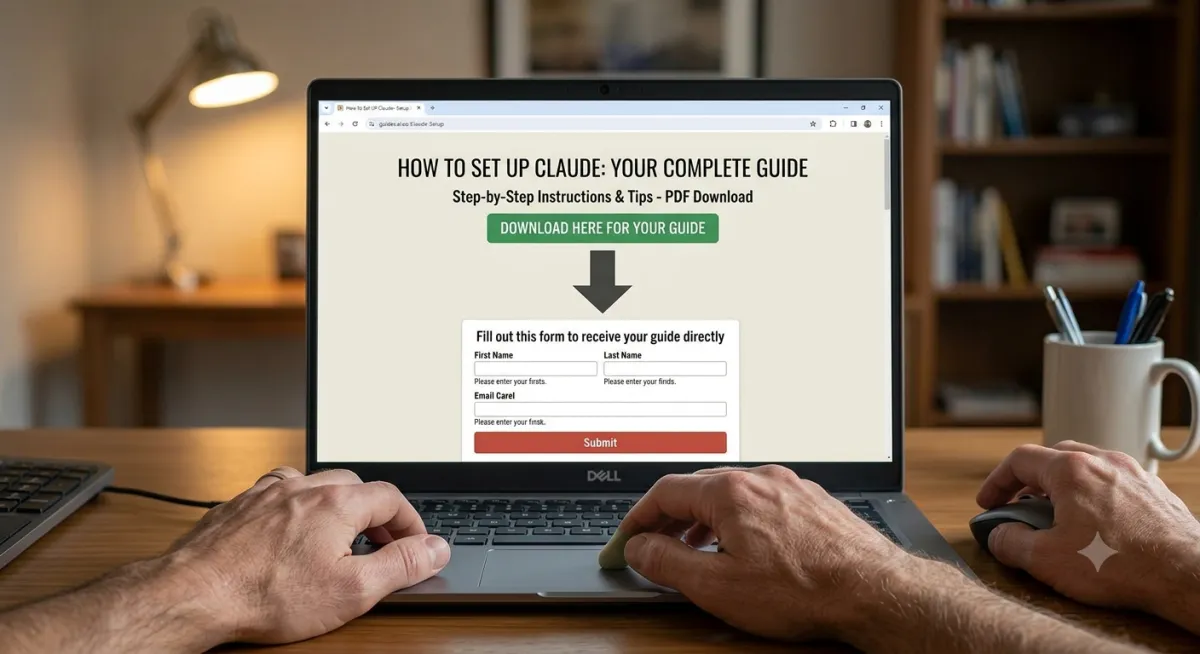
Most lead magnets get abandoned because they feel like work in exchange for a reward the person cannot see yet. A gated PDF asks for an email up front, then hands over a file the reader has to go study on their own time. The effort comes before the payoff, so people leave.
The numbers back this up. Across 93 million tracked sessions, form analytics firm Zuko found that only 45% of people who visit a form complete it, and even among the people who start typing, only about two-thirds finish. Contact-style forms are the worst performers, converting roughly 9% of visitors. Zoom out and 81% of people say they have abandoned at least one web form. That is not a traffic problem. It is a trade problem. The person did the math on effort versus reward and the reward lost.
So the fix is almost never "drive more visitors." It is changing what the person gets, and when they get it.
What actually makes someone finish?
People finish when the thing gives them a real answer about themselves. A number, a result, a readout that is specific to their situation and that they wanted before they arrived. When the payoff is personal and it shows up as they go, finishing becomes the reward instead of the cost.
Interactive formats show this plainly. Riddle's 2025 quiz report found that lead-generation quizzes hit a 41.4% opt-in rate versus 1.9% for pop-ups, with a 73.4% completion rate. Interact's benchmark data puts the average quiz at around 40% start-to-lead conversion. A static download rarely comes close, because a PDF answers a general question and an interactive tool answers the person's specific one.
Here is a real example. The Park County tax receipt tool on benninsystems.com shows a homeowner where their own property tax dollars go, itemized like a receipt: this much to schools, this much to roads, this much to the county. It does not explain "how property taxes work" in the abstract. It answers "where does my money go," using the person's own number. That is why people finish it. They came for an answer about themselves, and the tool hands it over.
Why does the email feel fair to give at the end and not the beginning?
An email up front is a toll booth before the person knows the road is worth driving. An email at the end, to save or send a result they already watched appear, is a fair trade. They have seen the value with their own eyes. Now the ask matches what they are getting.
This is the difference between a gate and an unlock. When someone works through a calculator or a quiz and the answer is already visible on the screen, the offer to email them the full breakdown, save their number, or send a tailored next step reads as helpful rather than extractive. The information they type in is volunteered, because they want the result it produces. Nobody has to trust you before they get anything. They trust you because you already gave them something true.
That order also respects the person. You are not overwhelming them into handing over contact details out of confusion or fear of missing out. You are trading fairly: a real answer for a way to keep it.
What does "value first, ask second" look like in practice?
It looks like a tool that solves one specific question, shows the answer as the person moves through it, then offers to send the complete result by email. The payoff is on screen before the ask. The email deepens it or saves it. It never stands between the person and the thing they came for.
A voice-analysis tool that reads back your brand's actual tone, a closing-cost estimate built on the buyer's real price point, a land-buyer qualifier built for a Montana real estate office that routes a serious buyer with full context instead of dropping a bare name into an inbox: each one gives the answer first. The email comes after, as the way to keep or act on what the person just saw. Compare the two shapes directly:
| The download that gets ignored | The tool that gets finished |
|---|---|
| Asks for the email first, delivers second | Delivers the answer first, asks second |
| Generic file, same for everyone | Personalized result, specific to the person |
| Payoff is "go read this later" | Payoff is "here is your answer right now" |
| Email feels like a toll | Email feels like an unlock |
| Value is a promise | Value is already on the screen |
This is also where a quiz or calculator beats a static PDF as a lead magnet, and why the format matters more than most people think.
How much should you actually ask for on the form?
Ask for what you will use in the follow-up, and nothing else. Every extra field costs completions, and each one has to earn its place. If you are not going to pick up the phone, do not require a phone number. The most effective form is the shortest one that still collects what the next step genuinely needs.
The abandonment data is specific here. FormStory's research found 27% of people abandon a form because it is too long, 29% cite security concerns, and 10% leave when asked for information that feels unnecessary. Requiring a phone number is especially costly: 37% of users will abandon a form that demands a phone number unless the field is optional.
One nuance keeps this from being a blanket "make it short" rule. Zuko's session data shows the raw number of fields is not perfectly correlated with completion. Relevance beats length. People will answer three or four questions that feel like they are shaping a better result, and they will quit a two-field form that feels like a trap. The test is not "how few fields," it is "does every field visibly help the person get their answer."
What happens after someone hands over the email?
The email is the start of the process, not the finish line. A captured email that gets no timely, relevant follow-up is worth about the same as no email at all. The tool should hand the person and their context straight into a follow-up that already knows what they came looking for.
This is where most setups quietly fall apart. The tool works, the email lands, and then nothing happens for three days, or a generic newsletter goes out that has nothing to do with the answer the person just got. Speed and relevance are the whole point. Leads go cold fast when there is a gap between the raised hand and the response, and missed follow-ups are one of the most expensive silent costs a small business carries. The result the person received is the script for what you say next. Capture with context means the follow-up is relevant instead of spam, and it is also how a one-time calculator turns into an ongoing client relationship.
An interactive tool is only worth building if it is attached to a real business process behind it. The answer on the screen is the front door. The follow-up is the house.
So is a PDF ever the right lead magnet?
Sometimes, yes. A PDF earns its place when the value truly is the document: a checklist someone will print and pin above their desk, a template they will reuse, a reference they want to keep. The format is not the villain. The mistake is using a passive file when the person actually wanted a personalized answer.
There is a harder version of this worth saying out loud. If your lead magnet is a 30-page ebook that nobody finishes, gating it harder will not fix it. Cutting it might. A genuinely useful one-page checklist, given away freely, often builds more trust than a long document locked behind a form. Match the format to what the person came for. When they want a keepsake, give them a clean document. When they want to know something about their own situation, give them a tool that tells them, and let the email be the way they keep the answer.
Pull up your current lead magnet and ask one question: does it give the person a real answer about their own situation before it asks for anything? If the email comes first and the payoff is generic, that is why the page is quiet. Fixing it is rarely about better copy on the form. It is about changing the order, and building the tool that gives the answer.
If you want help figuring out what kind of interactive tool would actually fit your business, and connecting it to the follow-up that runs behind it, Bennin Systems builds that.
Frequently Asked Questions
What is a lead magnet?
A lead magnet is something of value a business offers in exchange for a person's contact information, usually an email address. Common formats include downloadable guides, checklists, templates, quizzes, and calculators. The goal is to start a relationship with someone who is interested but not yet ready to buy.
Why do interactive lead magnets convert better than PDFs?
Interactive lead magnets like quizzes and calculators give a personalized answer about the person's own situation, so finishing feels like the reward rather than the cost. Lead-generation quizzes have reported opt-in rates above 40%, while static downloads often convert in the single digits because the payoff is generic and arrives after the effort.
Should I ask for an email before or after the lead magnet delivers value?
Ask after, in most cases. When the person can already see a real answer on the screen, offering to email them the full result reads as an unlock rather than a toll. Asking for the email first, before any value is visible, is one of the main reasons people abandon a form partway through.
How many form fields should a lead magnet have?
Only as many as your follow-up will actually use. Around 27% of people abandon a form for being too long, and requiring a phone number can push abandonment higher still. That said, raw field count matters less than relevance: people will answer several questions that shape a better result and quit a short form that feels pointless.
Do quizzes really get higher opt-in rates than pop-ups?
Yes, by a wide margin in the available data. Riddle's 2025 report found lead-generation quizzes converting at 41.4% versus 1.9% for pop-ups, with completion rates above 73%. The gap comes from the trade: a quiz gives a tailored result the person wanted, while a pop-up interrupts without offering anything specific first.
What should happen after someone completes my lead magnet?
The captured email should feed straight into a timely, relevant follow-up that already knows what the person came for. A tool that collects emails but has no process behind it wastes the interest it created. The result the person received tells you exactly what to say next, which keeps the follow-up specific instead of generic.
Is a PDF ever a good lead magnet?
Yes, when the value is genuinely the document itself, such as a checklist, template, or reference someone will keep and reuse. The problem is using a passive file when the person wanted a personalized answer. Match the format to what the person actually came for rather than defaulting to a download.
Bennin Systems, Paradise Valley, Montana. (406) 224-3267. benninsystems.com
