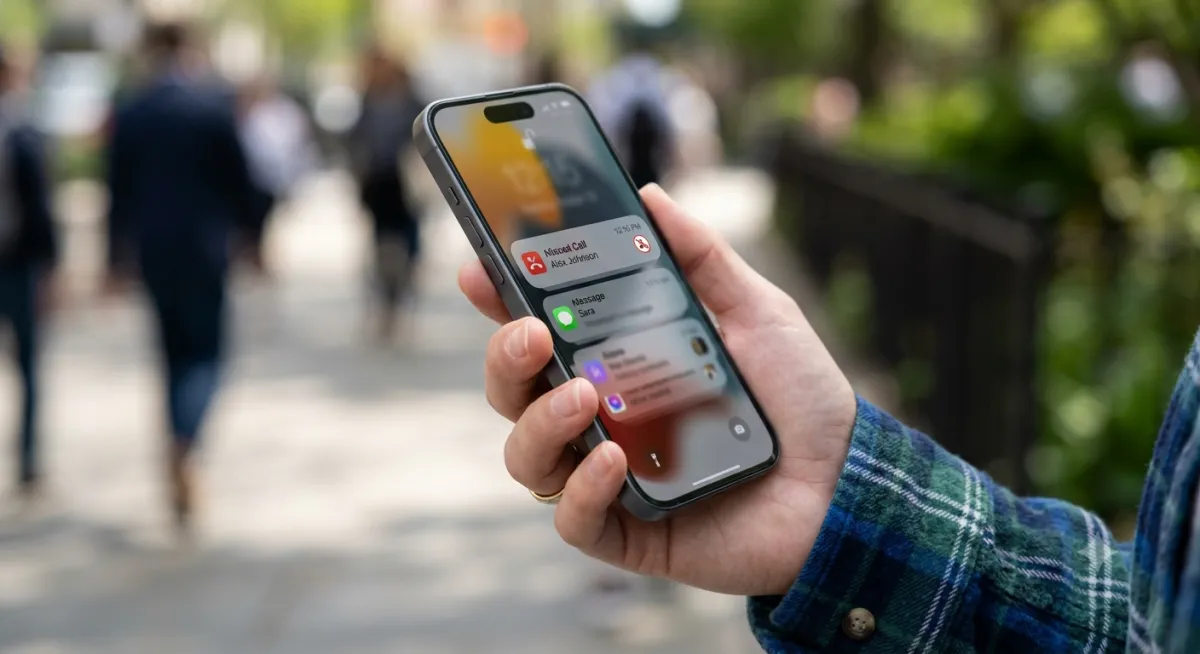
How Does Missed Call Text-Back Work, and Why Does It Matter?
The simplest automation in the stack is the one that answers when you can't.
Updated July 16, 2026.
The short answer: Missed call text-back is an automation that sends a text message to any caller you fail to answer, within seconds of the missed call. It matters because most calls to small businesses go unanswered, many callers will not try twice, and a fast text keeps the conversation alive until a person can take over.
You already know the feeling from the other side. You call a plumber, it rings out, and you do not leave a voicemail. You call the next plumber on the list. Somewhere, the first plumber paid for a website, a Google listing, maybe an ad, all to make that phone ring. Then the ring went nowhere.
That is the problem missed call text-back exists to solve, and it is worth understanding even if you never buy a piece of software, because the numbers behind it are worse than most owners assume. A study by 411 Locals, a local-SEO firm that monitored 85 businesses across 58 industries, found that only 37.8 percent of calls were answered by a live person. The rest, about 62 percent, went to voicemail or to nothing at all. That study is now a decade old, and the structural reason behind it has not changed: in most small businesses, the person answering the phone is the same person doing the work.
Bennin Systems builds phone and follow-up systems for small businesses and real estate professionals from Paradise Valley, Montana. This post explains what missed call text-back is, why the first few minutes matter so much, and when it is the wrong tool.
What Is Missed Call Text-Back?
Missed call text-back is a simple automation: when a call to your business goes unanswered, the system automatically sends the caller a text message within seconds, in your words, so the person who just reached out gets acknowledged instead of abandoned. The reply comes back to you as a normal text conversation.
No robot answers the phone. No menu tells anyone to press two. The call simply behaves the way it always has, and the difference shows up a few seconds after it ends, when the caller's phone buzzes with something like: "Hi, this is Sarah at Bridger Plumbing. Sorry we missed you. What can we help with?"
Notice what that message does. It names the business, it apologizes once, and it asks a question the caller can answer with their thumbs while they are still standing next to the broken water heater. The conversation that would have died in a ring-out is now open.
One more thing worth saying plainly, because the label "automation" makes people picture something complicated: missed call text-back does not require AI. It is a rule. If call is missed, then send text. The intelligence in the system is not artificial. It is the judgment of whoever wrote the message and decided what happens after the reply.
How Does It Work When a Call Comes In?
In a typical setup, the mechanics run in a fixed sequence: the phone system notices an unanswered call, waits a beat, sends a pre-written text from your business number, and files both the missed call and the reply into one conversation record. Every step in that sequence runs on its own; the humans come back into the picture when the reply arrives.
From the caller's side, the whole thing takes seconds. From your side, the sequence looks like this:
A call comes in while you are on a ladder, with a client, or asleep.
The system registers the missed call.
A text goes out from your business number, written in advance, in your voice.
The caller replies, and that reply lands in the same inbox your team already checks.
The contact, the missed call, and the conversation are logged in your customer records automatically, so nothing depends on anyone remembering it happened.
Step five is the part most people underrate. The text is the visible feature. The record is the durable one. When the builds we ship at Bennin Systems include missed call text-back, it runs inside GoHighLevel, wired into the same pipeline that handles follow-up sequences and lead routing. The point is never the text by itself. The point is that a phone call, the most old-fashioned lead there is, now enters the same system as everything else instead of evaporating.
How Many Calls Do Small Businesses Actually Miss?
More than half, by the best available measurement. The 411 Locals study found 37.8 percent of calls answered live, 37.8 percent sent to voicemail, and 24.3 percent getting no response at all. It also found that 70 percent of businesses answered fewer than half of their calls.
Those numbers deserve one honest caveat: the study dates to 2016, and no comparably rigorous public study has replaced it since. Treat the 62 percent as a well-documented order of magnitude, not a live reading of your own phone line. Your phone log will give you your real number in about five minutes, and for most owner-operated businesses it will not be flattering.
The structural reason is easy to see in federal data. Per the U.S. Census Bureau's 2023 figures, employer businesses are only 21.6 percent of all U.S. businesses, which means roughly four out of five American businesses have no paid employees at all, by the Census Bureau's count, which includes solo operators of every kind, from contractors to consultants. In those businesses there is no receptionist because there is no staff. The person who answers the phone is also the person under the sink, behind the wheel, or across the table from a client who deserves full attention.
That is not a failure of effort. It is arithmetic. One person cannot both do the work and answer every call about future work. The choice is not between answering and not answering. It is between having a system that catches what you miss and having nothing there at all. The cost of having nothing there is paid in customers you never knew existed.
Why Do the First Few Minutes Matter So Much?
Because the caller's intent decays fast. A person with a problem calls, gets no answer, and moves down the list while the problem is still in front of them. Research has shown for years that businesses respond to new inquiries far too slowly, and that speed of response is one of the strongest predictors of whether an inquiry becomes a customer.
Harvard Business Review published the landmark research on this back in 2011, in a piece titled The Short Life of Online Sales Leads, and its core finding was blunt: most companies are not responding nearly fast enough.
The pattern has not improved much. One vendor benchmark of 939 B2B software companies covering Q2 2025 through Q1 2026 reported an average lead response time of 47 hours, only 23 percent of companies responding within five minutes, and leads contacted within five minutes closing at 32 percent versus 12 percent for leads contacted after 24 hours. That is one firm's self-reported analysis of software companies, not plumbers, so carry the numbers over loosely. But the shape of the curve is the same in every business we have built systems for: fast response wins by multiples, not percentages.
A missed call is the most perishable lead there is, because a phone call is one of the highest-intent actions a customer can take. Almost nobody dials a number out of idle curiosity. They dial because they want to talk to someone today. Leads go cold before you can call back not because callers are impatient by nature, but because their problem does not wait politely for your schedule.
Text-back does not make you faster. It makes the first response instant while you stay exactly as busy as you were.
Why Send a Text Instead of Hoping for a Voicemail?
Because texting is where your callers already live, and voicemail asks them to do work they have quietly stopped doing. Per the Pew Research Center's 2025 survey, 98 percent of American adults own a cellphone and 91 percent own a smartphone. Nearly every caller can receive your text moments after the call fails.
A voicemail greeting asks the caller to compose a message, out loud, to a machine, and then wait an unknown amount of time for a stranger to maybe call back. A text asks them to type one sentence whenever it suits them, into a thread that already shows who they are talking to. One of those is a favor the caller does for you. The other is a service you do for the caller.
The honest caveat: not everyone texts. Some of your customers, including plenty in rural markets like ours in Montana, will prefer a ringing phone and a human voice. Text-back does not take that away from them. The phone still rings, you still answer when you can, and voicemail can still exist behind the text. The automation only changes what happens in the gap.
When Is Missed Call Text-Back the Wrong Move?
Skip it, or fix something else first, when the phone rarely rings, when nobody will answer the replies, or when your callers genuinely cannot text. An automation attached to a broken process does not fix the process. It just documents the failure faster.
The situations where we would tell a business not to buy this:
Your phone is not ringing. Text-back catches demand you already have. If the calls are not coming in, the problem is visibility, and the money belongs there first.
Nobody owns the replies. If a caller texts back "yes, my water heater is leaking" and that message sits unread until Thursday, you have recreated the original silence one step later. The text buys you minutes and hours. Someone still has to show up in the conversation. A text-back with no follow-up system behind it is a lobby with no building.
The message is bait. A first text that opens with qualifying questions about budget reads exactly like what it is. The message has one job: acknowledge the person and open a door. Selling comes later, from a human.
The expectation is emergency response. If people call you mid-crisis, a text that says "sorry we missed you" can read as negligence. Businesses like that need a live answer, whether that is staff, an answering service, or a voice assistant that actually handles the call.
One practical note from the builds we do: business texting in the United States generally runs through a carrier registration process, and unregistered business numbers are increasingly filtered before delivery. Getting that registration done properly is part of every deployment we ship, and it is the kind of unglamorous groundwork that separates a system that works from a demo that worked once.
What Does This Look Like in a Real Business?
Say a two-person excavation outfit misses six calls in a working day, which is unremarkable for a crew that runs machines with their hands. Without a system, those six calls produce two voicemails and four permanent mysteries. With text-back, all six callers get a message within seconds, and the owner spends ten minutes at lunch and ten after dinner replying to whoever answered. Nothing about the day's work changed. The only thing that changed is that the business now knows all six people exist.
The heavier version of the same principle runs at Scotty's Oil, a family fuel company where Bennin Systems deployed a voice assistant named Emma that answers the phone and takes heating oil orders when no one can pick up. Emma is a bigger build than text-back, and most businesses do not need her. The principle is identical: the moment a customer reaches out is the moment they are most ready to be helped, and a system can hold that moment open until a person arrives. If you are weighing the lighter tool against the heavier one, start with what an AI assistant can actually do for a small business and be skeptical of anyone who insists you need the expensive version.
A Missed Call, Three Ways
The Bottom Line
A missed call is not a phone problem. It is a handoff problem. The customer reached out, and nothing was there to receive them. Missed call text-back is the cheapest, plainest fix for that handoff, which is exactly why it is usually the first automation worth building: not because it is impressive, but because it attaches directly to a moment where money already changes direction. Automation earns its keep when it is bolted to a clear business process. This is the clearest one there is.
Next Steps
Open your phone log and count last week's missed calls. That number, held against what one new customer is worth to you, is the entire business case, and it took five minutes to build. If the number is small, you have my honest permission to spend your money elsewhere.
If the number is not small, and you want the catch-and-follow-up system built properly, registered with the carriers, and wired into records you own, Bennin Systems builds exactly that. You can also start by mapping where your other inquiries leak, because missed follow-ups usually cost more than missed calls.
Frequently Asked Questions
What is missed call text-back in simple terms?
It is an automation that sends a text message to anyone whose call your business fails to answer, usually within seconds. The text acknowledges the caller and invites a reply, and the reply arrives as a normal text conversation your team can pick up when free.
How fast does the text go out after a missed call?
Typically within seconds of the call ending, and well under a minute. The speed is the entire point: the caller is still holding their phone, still thinking about their problem, and still available to reply, which is a window that closes within minutes.
Does missed call text-back require AI?
No. It is rule-based automation: if a call is missed, a text is sent. No artificial intelligence is involved unless you add it later, for example to answer common questions in the thread. The base system is simple, reliable, and does not guess.
What should the first text say?
Your business name, a brief apology, and one open question, in the same words you would use in person. Something like "Hi, this is Mike at Ridgeline Excavation. Sorry we missed your call. What can we do for you?" No links, no forms, no qualifying questions.
Will customers find an automatic text annoying?
Rarely, if the message is honest and a human shows up in the thread afterward. What annoys people is silence, bait, or a robot pretending to be a person. A text that plainly says you missed the call and asks how to help reads as service, not spam.
What does missed call text-back cost?
The software cost is modest, and it usually comes bundled inside a phone or CRM platform a business already pays for, so the marginal cost is often close to zero. The real costs are setup done properly, carrier registration for business texting, and the discipline to answer replies.
Is missed call text-back the same as an answering service or AI receptionist?
No. An answering service or voice assistant answers the call itself, live. Text-back lets the call go unanswered and recovers the caller by text afterward. It is the lighter, cheaper layer, and for most small businesses it is the right place to start.
Bennin Systems, Paradise Valley, Montana. (406) 224-3267. benninsystems.com
Stacy Bennin is the founder of Bennin Systems, where she builds the automated systems small businesses need but rarely have time to set up themselves: lead capture and follow-up that runs on its own, chatbots that answer questions and take orders around the clock, custom websites that act as an employee, and the back-office workflows that keep an operation from running on memory and sticky notes. Located in Montana, she works with businesses and real estate professionals anywhere in the United States. She is also a licensed Montana real estate broker affiliated with Legacy Lands Real Estate. Reach her at benninsystems.com.
